
Eczema
What is Eczema?
Eczema is an inflammatory skin condition that causes itchiness, dry skin, rashes, scaly patches, blisters and skin infections. Itchy skin is the most common symptom of eczema.
- Eczema is not a bacterial or viral disease that can spread in unhygienic conditions, because unhygienic conditions actually make it less likely.
- Genetics may play a large role. If a child’s parent had eczema as a kid, the child is much more likely to get eczema as well. But not just that. A family history of Asthma or Hay Fever also seems to correlate highly with risk of eczema.
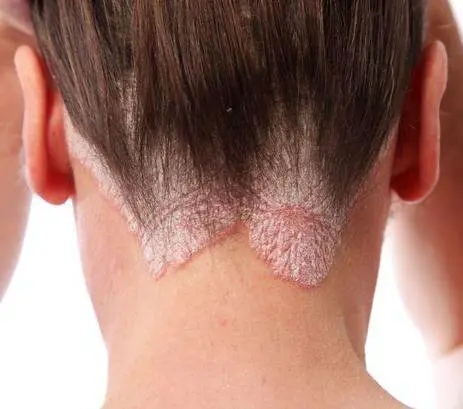
Eczema is not a bacterial or viral disease, it is not contagious, and it is not the result of a lack of hygiene or poor living conditions (if anything, just the opposite). Rather, it’s a condition caused by environmental and genetic factors interacting in ways we don’t quite understand to produce a certain set of symptoms.
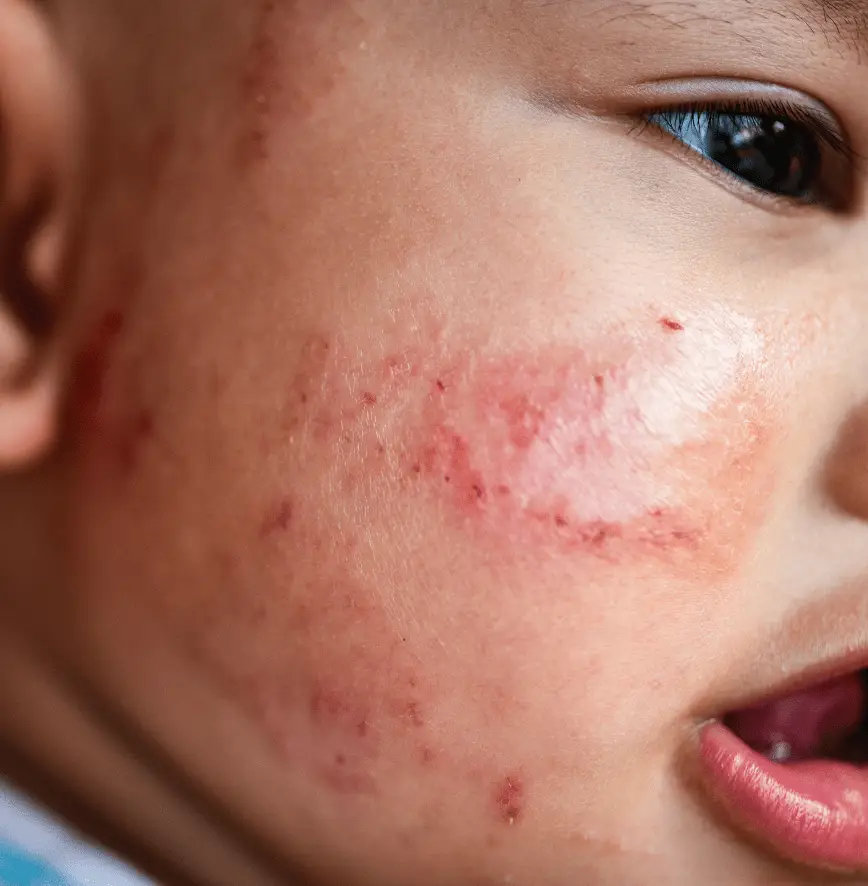
Those symptoms manifest differently for different age groups. As we have mentioned, eczema primarily affects children. Between 10 and 20 percent of children get eczema, compared to 1-3% of adults. 90% of cases occur before the 5th birthday.
They also might have trouble sleeping, which makes sense; you’d have trouble sleeping too if you had an itchy rash and no fine motor skills. These rashes may bubble up and ooze or weep fluid or can become infected because of the aforementioned rubbing and scratching.
Children (from ages 2 and up until puberty) have different symptoms than infants. Their dry, itchy, and scaly rashes appear mostly in the creases of the elbows and knees, the creases between the legs and buttocks, neck, wrists, or ankles. In time, these rashes can become bumpy looking (like permanent goose bumps), lighten or darken, thicken in response to constant scratching and develop knots. They can even become itchier over time.

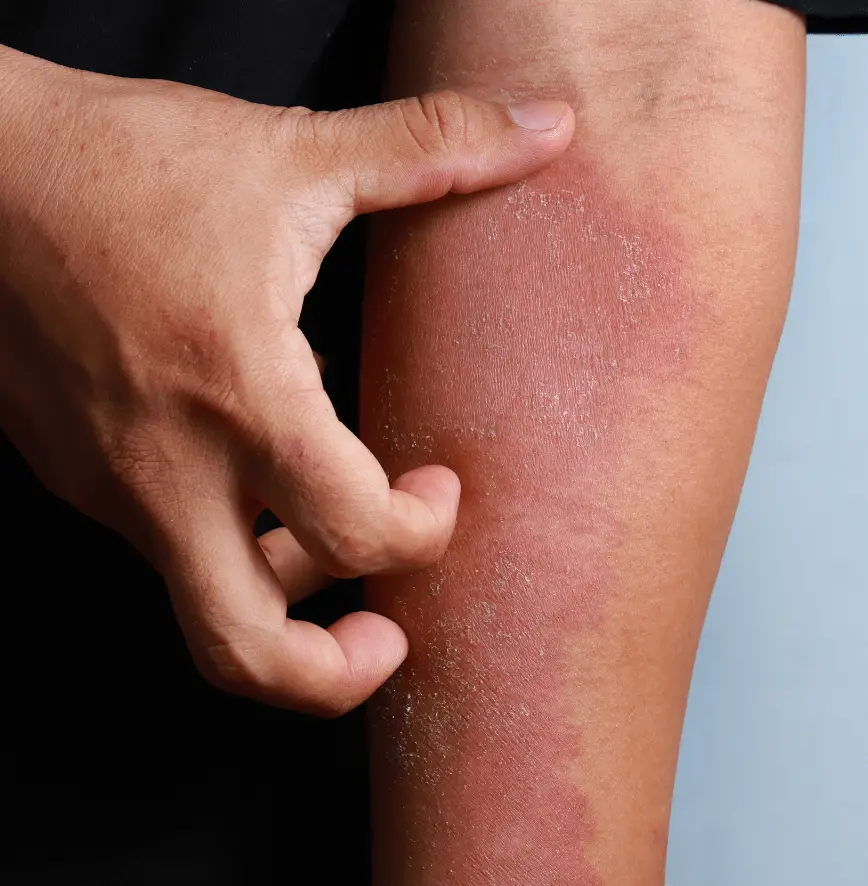
Adults, who, to reiterate, make up a tiny fraction of eczema cases, manifests as very dry, very scaly (scalier than children’s eczema) rashes that appears in the creases of the elbows or knees, the nape of the neck, or just all over the body, and can be especially noticeable around the face, particularly near the eyes. It can itch non-stop, can thicken, and can become infected.
How do you treat eczema?
As we have mentioned, eczema is a condition that results from a certain set of environmental and genetic factors that interact in ways that are still poorly understood. That means that unlike other skin diseases, where we can try and get rid of the thing that causes the disease, whether it’s a bacteria or a virus or oil build up or what have you, with eczema, we don’t have that option, because changing one’s genetic makeup is still considered unethical and changing their entire living circumstances is impractical. So when treating eczema, we don’t so much address the causes of the symptoms than the symptoms themselves.
There’s one exception to this, which is allergic reactions. Skin reactions to allergens and eczema are very similar. You might even say that eczema is best defined as “the skin’s allergic reaction to something we don’t know about”. So the first response to a case of eczema, particularly if it’s in an adult, is to try and figure out whether it’s eczema or just an allergic reaction. People have allergic reactions to all sorts of things; certain laundry detergents, gold jewelry, fake jewelry, certain fragrances. If the rash only appears in a certain area touched by something that might be an allergen, try removing the allergen from the equation. That would be the easiest and most straightforward way of dealing with the problem.

If that doesn’t work, we’re back on symptom management. That means, primarily, two goals:
- Get rid of the rash
- Prevent infection
To get rid of the rash, and reduce dryness and itchiness, use moisturizer. Which moisturizer? Pick one. Just go down the aisle at your local pharmacy and pick one. Different brands work best for different people, and some trial and error may be necessary for determining which brand is best for you or your child. For a cheaper and fragrance-free option, consider using petroleum jelly. Apply the moisturizer at least twice a day, or when you or your child’s skin seems dry.
To prevent infection, really try your best to keep from scratching. When you scratch, you create holes in your skin that bacteria can get inside of, particularly when your skin is damaged as it is. This is a hard job for adults, to say nothing of children, so with children, some tricks may be necessary. Make sure their fingernails are short and smooth, to limit scratch damage. At night, putting cotton gloves on your child may prevent them from scratching during sleep.
The good thing is, eczema usually goes away on its own, even if it can be frustrating and painful while it’s present. If it’s any comfort, bear in mind that if you or your child has eczema, because of the environmental factors we mentioned at the beginning of this article, your life is in all likelihood pretty good in all the other areas besides “not having a dry, itchy, scaly rash”.
Hear from Our Patients:

Get in Touch Now
Have questions or need assistance? Make sure to use our contact form for all inquiries.